
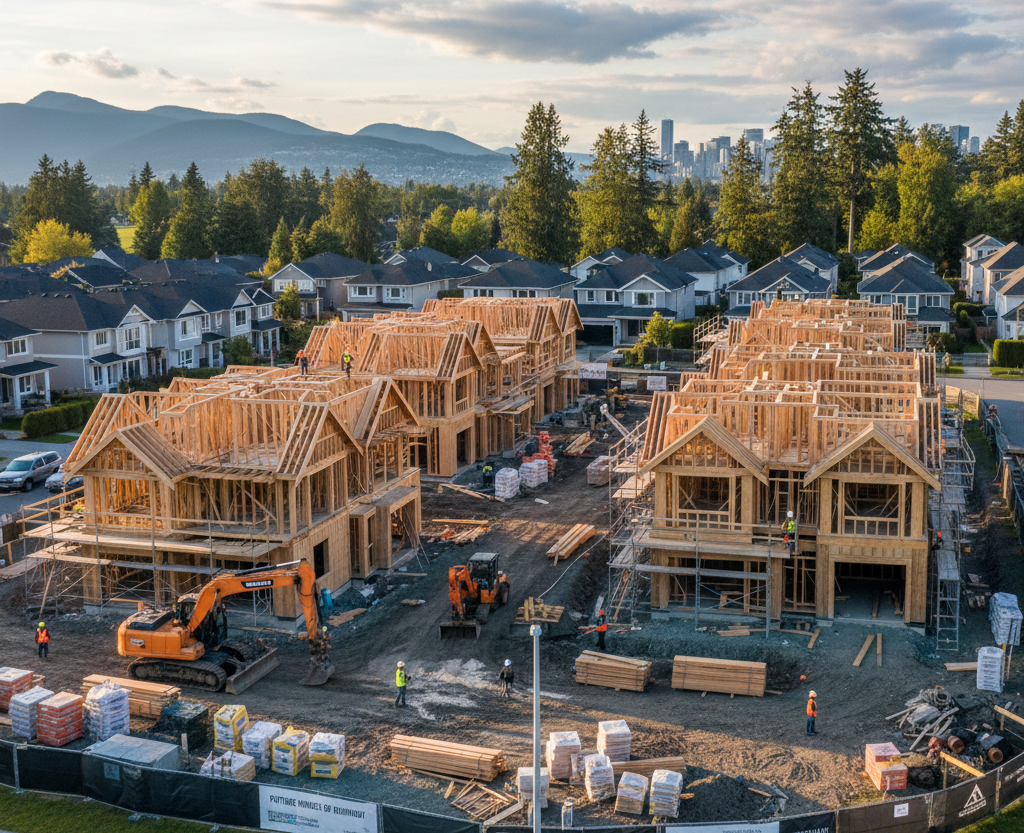
Is the "one-size-fits-all" approach to housing helping or hurting our neighbourhoods?
If you’ve been following the news lately, you might have seen that things are heating up between our local leaders and the provincial government. As a Realtor here in Burnaby, I keep a close eye on these shifts because they change the game for homeowners and buyers alike.
Recently, something unprecedented happened: 16 mayors from across Metro Vancouver, including our very own Mayor Mike Hurley, joined forces to send a clear message to Victoria. They are asking the province to hit the "pause" button on several major housing laws.
Why the Pushback?
Our local mayors aren't saying "no" to housing—they're saying "not like this." Here are the three main areas where they feel the province has overstepped:
Small-Scale Multi-Unit Housing (Bill 44): This law allows 3 to 6 units on traditional single-family lots. Mayors argue that doing this everywhere at once ignores whether a specific street’s pipes or power grids can actually handle the extra people.
Transit-Oriented Areas (Bill 47): This mandates high-density towers near SkyTrain stations. While we all love transit-access, mayors are worried this overrides decades of careful community planning.
Housing Targets: The province has set strict "must-build" numbers for cities. However, mayors point out that they can’t control interest rates, labor shortages, or federal funding—yet they’re the ones being held accountable if the numbers aren't met.
The "Burnaby Perspective"
Mayor Mike Hurley has been a vocal leader in this coalition. The big concern for us in Burnaby? The loss of public hearings. New provincial rules mean that for many projects, the public no longer gets a formal seat at the table to voice concerns. For many, this feels like a hit to local democracy.
A Region Divided?
Interestingly, this isn't a unanimous "revolt." Major cities like Vancouver and New Westminster chose not to sign the letter. This shows a real split in how different cities want to tackle the housing crisis. Some are leaning into the provincial mandates, while others—like the 16 who signed—fear that "top-down" rules will lead to land speculation and higher prices rather than true affordability.
What This Means for You
So, what does this mean for the average Burnaby resident or property owner?
Uncertainty in Planning: With the mayors and the province at odds, some development projects might face delays while the "rules of the road" are debated.
Infrastructure Questions: If density increases without local oversight, we have to stay vigilant about our parks, schools, and transit capacity.
Market Shifts: These laws change what a single-family lot is worth. If you own property near a transit hub or on a large lot, your "highest and best use" value just changed.
The Bottom Line
We all agree we need more homes, but the path to getting there is under construction. Whether you believe the province needs to take charge to solve the crisis or that local mayors know their streets best, one thing is for sure: the 2026 civic elections are already shaping up to be all about housing.

 The data relating to real estate on this website comes in part from the MLS® Reciprocity program of either the Greater Vancouver REALTORS® (GVR), the Fraser Valley Real Estate Board (FVREB) or the Chilliwack and District Real Estate Board (CADREB). Real estate listings held by participating real estate firms are marked with the MLS® logo and detailed information about the listing includes the name of the listing agent. This representation is based in whole or part on data generated by either the GVR, the FVREB or the CADREB which assumes no responsibility for its accuracy. The materials contained on this page may not be reproduced without the express written consent of either the GVR, the FVREB or the CADREB.